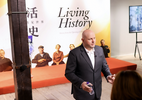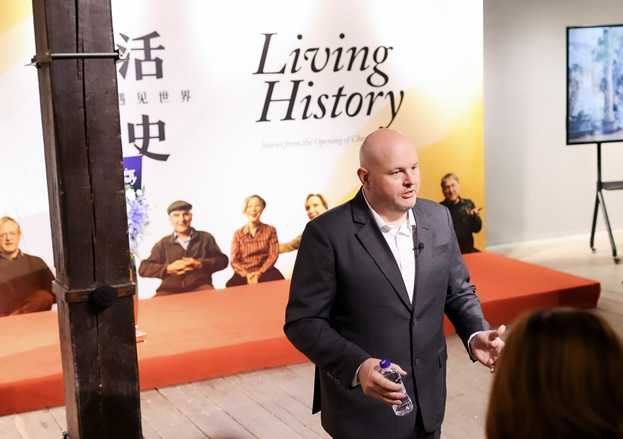
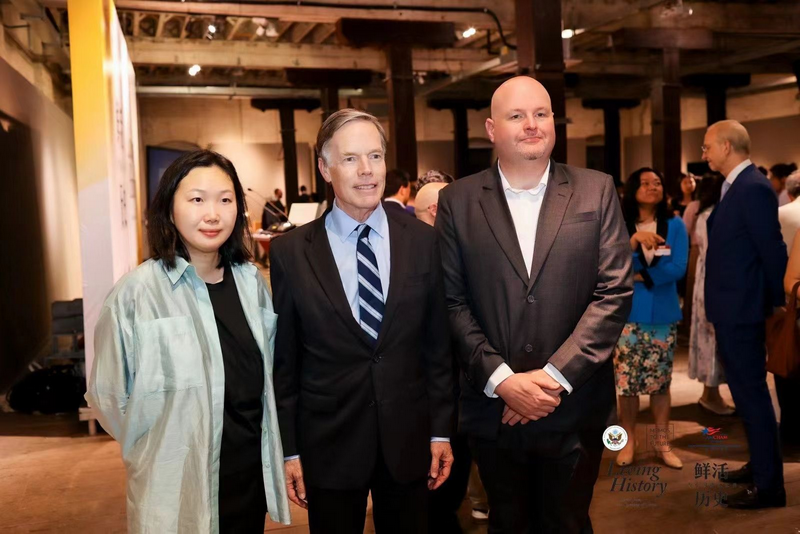
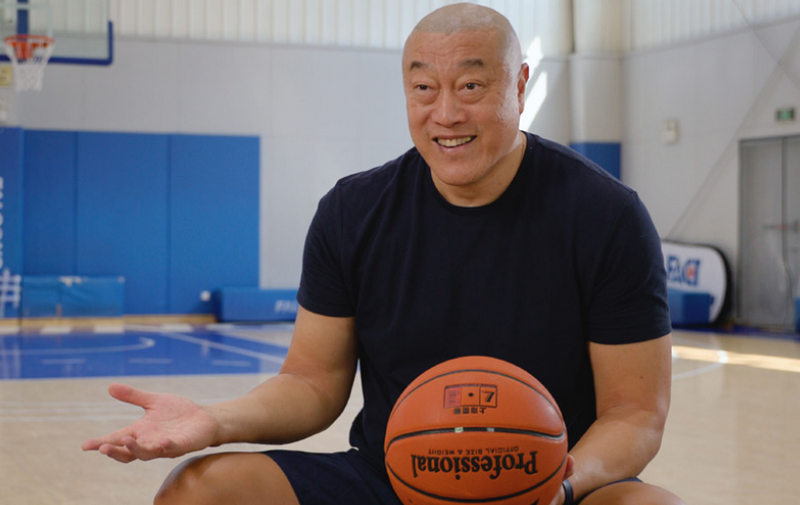

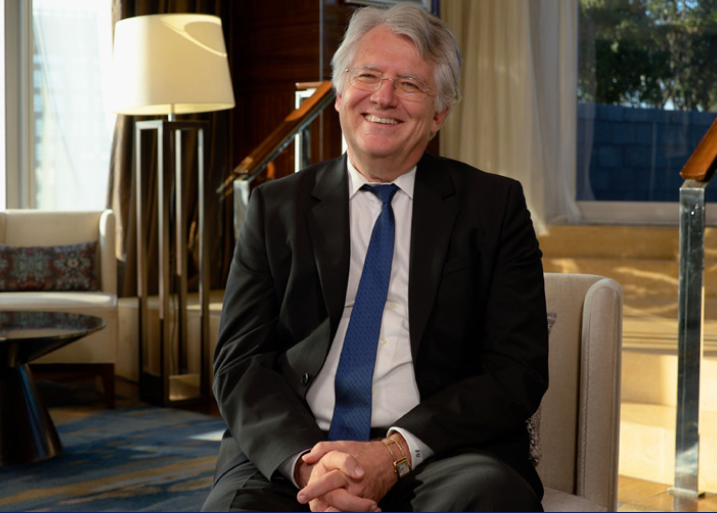
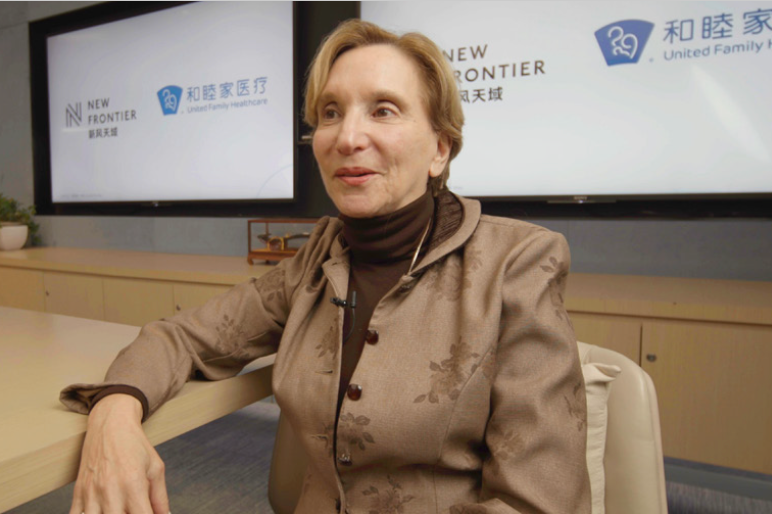
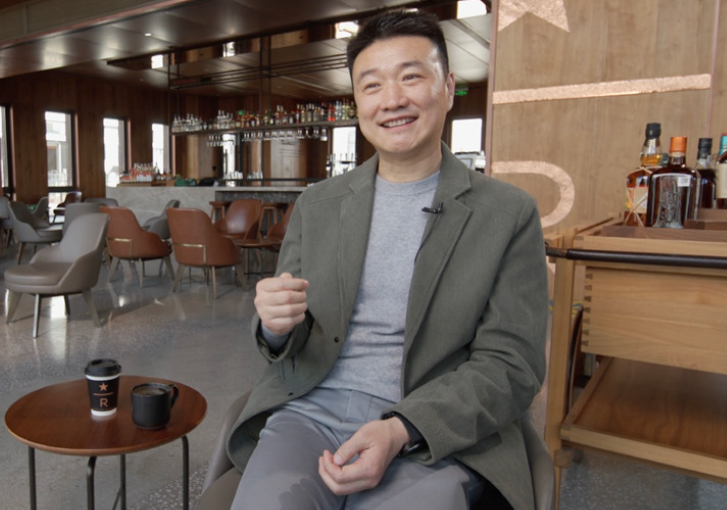
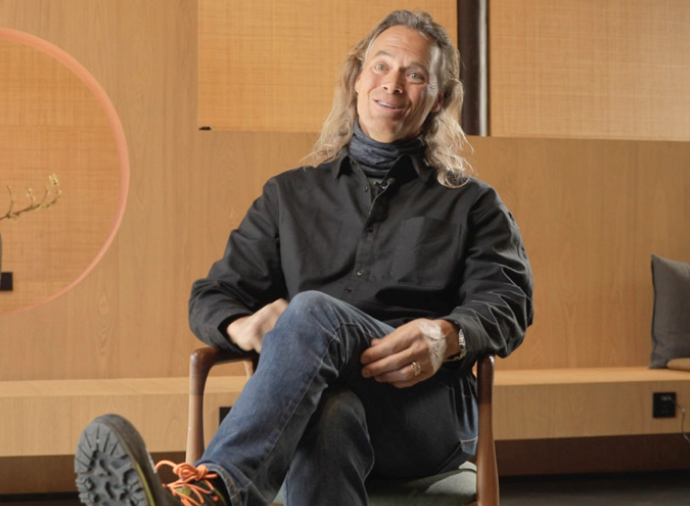

Originally from Germany, Christian Petersen-Clausen has lived in China for nearly 14 years. Together with his Chinese co-director Wu Yuxiao, he is producing the historical documentary series Living History: Stories from the Opening of China, which explores the shared experiences of Chinese and foreign citizens in the period following the opening of China to the West in 1979.
The project seeks to interview 100 contemporary witnesses—including students, professors, architects, artists, businesspeople, diplomats, and journalists—to preserve memories of this crucial time in recent Chinese history for future generations. Supported by NGOs, embassies, and private donations, the non-profit initiative has reached over two million viewers through social media, with 33 episodes released on YouTube so far.
Among the interviewees are figures such as Ma Jian, the first Chinese basketballer to play in college in NCAA Division One, whose early career helped pave the way for later athletes like Yao Ming. Janet Yang, who served as president of the Academy of Motion Picture Arts and Sciences from 2022 to 2025 (Oscars), recalls her early work in Shanghai in 1983, when she accompanied Steven Spielberg during the filming of "Empire of the Sun," the first Hollywood movie shot in Shanghai after China's opening.
Other guests include Roberta Lipson, who founded China's first private, foreign-invested hospital in 1997, later expanding it into the United Family Hospitals and Clinics, which own 11 hospitals across the country; Joerg Wuttke, a longtime BASF executive and former president of the European Union Chamber of Commerce in China, is known for his role in deepening European business engagement in China; and William Huang, who sold the first Starbucks coffee in China in 1999, now manages more than 400 cafes.
In an exclusive interview with China Christian Daily, Petersen-Clausen reflects on the vision behind the project, as well as his understanding of China-U.S. exchanges and media storytelling.
China Christian Daily: Could you tell us about your life journey—for example, how you became a Christian, why you came to China, and some of your experiences here?
Christian Petersen-Clausen: I was born in a Christian family in a small town in northern Germany called Flensburg, near the Danish border between Hamburg and Copenhagen. Being a Christian is our culture, so I grew up as a Christian. Different from what "evangelical" means in the United States, the Protestant denomination there is fairly liberal: Protestants don't go to church as often as Catholics do. We're like Shandong people who are more conservative and more private about things.
I moved to Los Angeles in 1999 to go to university, where I studied graphics, design, and film. I spent about 10 years living in the U.S., working in Los Angeles, New York, and Chicago. Then I moved back to Germany for two years to be closer to my grandparents as they grew older, but I found life there a little boring. I want new things every day, so I got a job offer from Shanghai in 2012.
I began traveling around China almost every weekend. Gradually, I realized I no longer wanted to work in an office anymore, so that's how I became a documentary filmmaker and a cameraman then, which allowed me to meet many people, see many places, and hear many stories. I also started helping many Chinese companies who would like to shoot videos for foreign investors and also foreign companies in China.
China Christian Daily: How did you first come up with the idea for this project?
Christian Petersen-Clausen: As a documentary film director, I mostly work with television stations such as CCTV and Discovery Channel, which often assign me specific story topics. I then visit companies and meet with CEOs or founders. Many of them have fascinating stories—they started small and gradually developed their businesses into much larger enterprises.
During these conversations, I often find myself thinking that the stories behind such success are truly remarkable. The same is true for university professors and artists. Over time, I realized that relatively few books document these kinds of life stories, and this realization eventually led us to start this project. Nicholas Burns, who served as U.S. Ambassador to China from 2021 to 2025, expressed support for our project and helped facilitate the application process.
China Christian Daily: Recently, you have been planning to produce an episode related to historical missionaries who came to China as part of the project. What inspired you to explore this theme?
Christian Petersen-Clausen: The grandparents of a well-known foreign journalist in China were missionaries in the 1920s who built an orphanage in a town in Fuzhou, Fujian Province. When I traveled to Fuzhou and other places in China, people often asked me whether I knew him. Since the Living History project focuses on the period after 1979, he told me that he might write a book about that earlier story.
There are other individuals who came to China to do research and write books in the 1980s, 1990s, and 2000s. I began to realize that I can ask a person about their cross-border stories to educate people about the stories of missionaries they're interested in today.
China Christian Daily: When conducting the interviews, how do you draw out the most valuable content? How do you shape such rich material into a documentary of around 70 minutes?
Christian Petersen-Clausen: We usually talk with each interviewee for about two hours. First, I begin by doing research and reading their books in preparation. During the interview, I try to remain curious and listen carefully.
It is also important to give people a moment because many are not used to speaking on camera. If something is not expressed clearly, I will ask them again, and then they will finish the answer in a different way.
I try to edit as little as possible. Most of our interviewees are interesting people, so it is not difficult to select the three to five strongest stories from each conversation.
China Christian Daily: After speaking with so many individuals involved in China–U.S. cultural exchange, what common insights have you observed? In your view, what are effective ways to promote grassroots exchange today?
Christian Petersen-Clausen: One of the best ways is to make local friends. I am married to a Chinese wife, and I'm learning Chinese every day, which helps me live independently and happily in China.
The problem is that we often do not know each other, so we get wrong opinions of each other. On social media, short clips that are most sensational or negative tend to be pushed to the top, which shapes perceptions. But real life is very different.
For example, some Chinese young people have told me that they do not want to go to the U.S. because they believe everybody gets shot on the street, but after living there for ten years, I found it to be perfectly safe.
I believe the principle of "guanxi" (building personal relationships) is very important. The best thing we can do is to bring people together. At the grassroots level, we can invite young people, especially college students, to work things together for a couple of months. When I bring international musicians to China in my work, they all say the same thing: "China is not what I expected. It's different."
China Christian Daily: What are some of the common misconceptions foreign people have about China?
Christian Petersen-Clausen: Many foreign people do not even know which cities in China are in the north or the south, for example, Beijing and Shanghai.
They have heard certain stories about Xinjiang or Tibet, and they are aware of China's strong government, but they tend to imagine it differently. Some imagine China to be like North Korea: It's true that China is not a democratic country and operates in a different system, but we are all living comfortable, nice lives here.
Politicians who know little about the other place or haven't lived anywhere else are shaping our lives. In every country, people are happy with some things while unhappy with others. My Chinese neighbors in the elevator complain every day about things that are exactly the same as my neighbors in Germany used to. As human beings, we have more in common than we differ.
China Christian Daily: What misunderstandings do Western audiences often have about Christianity in China?
Christian Petersen-Clausen: A key misunderstanding is about freedom. Many foreign people assume that religious freedom is impossible in China. When you do not experience daily life here, you speculate, filling in the blanks, often with the worst ideas.
We all hear news when something unusual happens, but people do not see everyday normal life. That's the reason why when an airplane crashes somewhere, that's on the news because it's special, but it's not a normal everyday occurrence. When a dog bites a man, it's not news because it happens every day.
China Christian Daily: How has the Living History project adapted to new media platforms? Could you introduce some of the current media trends that you have observed or are engaged with?
Christian Petersen-Clausen: We initially published the full episodes on YouTube and Bilibili, and then released three-minute clips on China's WeChat, Douyin (China's version of TikTok), RedNote, Instagram, Facebook, and TikTok.
Sadly, our Chinese social media accounts have been taken down, and we hope they will be restored in the future. I believe it is important for government officials and creators to understand each other better.
There is a strong trend of people watching short videos on Douyin and TikTok and then seeking out more in-depth content. At the same time, long-form storytelling is also growing online. I write long articles behind the scenes on Substack to stay in touch with passionate fans. We receive many interesting messages.
We're surprised to learn that young students at top universities, including Tsinghua, Fudan, and Peking University, use our videos to practice English. As a result, we have started adding Chinese subtitles to some episodes. We have also produced two episodes featuring Brian Linden and Zhang Huan with English subtitles.
China Christian Daily: You mentioned the American Brian Linden, who conducted the entire interview in Chinese. What has impressed you most about his story?
Christian Petersen-Clausen: Brian Linden grew up in a poor family in Chicago and earned money by washing carpets after school. Before coming to China, he did not even know where China was on a map.
In 1983, while he was cleaning carpets, a client asked him to place a flag pin on China on the map, but he was unable to find it. The client, a professor from the University of Chicago, helped him locate it. Later, he told him that China was asking him to find English teachers.
The professor encouraged him to find a new dream abroad since his American dream broke up due to a limited educational background. In 1984, with a scholarship from the Chinese government, he came to China to teach English. He later worked as a cameraman with CBS News in Beijing and even met then-President Deng Xiaoping. Eventually, he founded the Linde Centre hotel in rural Yunnan, a boutique hotel and cultural exchange project.
View the trailer