On April 3, Cai Xueqian, a doctoral candidate at the Hebrew University of Jerusalem, discussed how the discovery of the Dead Sea Scrolls has reshaped the study of ancient Judaism and early Christianity. In his lecture, he revealed a fluid and diverse scriptural landscape that challenges traditional understandings of the Bible and provides a crucial backdrop for the messianic and apocalyptic expectations prevalent in the Second Temple period.
The online lecture, "Storms of the Judean Desert: How the Dead Sea Scrolls Reshape Ancient Judaism and Early Christian Studies," was part of the Eranos Colloquium, an academic community voluntarily organized by doctoral candidates and early-career researchers in theology, religious studies, and related fields, both in China and abroad. Committed to promoting in-depth engagement with contemporary issues in theology and religious studies, the colloquium encourages dialogue both within and across disciplines. In the long term, it aims to reflect on how Chinese theology and related fields may develop in the present context, and how young Chinese scholars can engage with and respond creatively to scholarship across different subfields in light of the needs of their own time.
Discovery and Controversy
During the lecture hosted by Yan Zhaoyu, a doctoral candidate in Old Testament studies at the University of Zurich, Cai began by recounting the well-known story of the scrolls' discovery by Bedouin shepherds in caves near the Dead Sea around 1947. He traced the complex early history of the scrolls' sale, which involved a Bethlehem antiquities dealer, the Syrian Orthodox Archbishop Athanasius Samuel, and Hebrew University professor Eliezer Sukenik. The initial seven scrolls were eventually consolidated in Israel and housed in the Shrine of the Book of the Israel Museum.
However, Cai noted that the subsequent research phase was marred by what has often been described as one of the great academic scandals of the twentieth century. A small, exclusive editorial team controlled access to the thousands of fragments for decades, dramatically slowing publication and research. This monopoly was eventually broken in the early 1990s through public pressure, the unauthorized publication of a computer-reconstructed text, and the leadership of new editor-in-chief Emanuel Tov, who expanded the research team and accelerated the publication of the entire collection.
Reshaping Hebrew Bible Studies
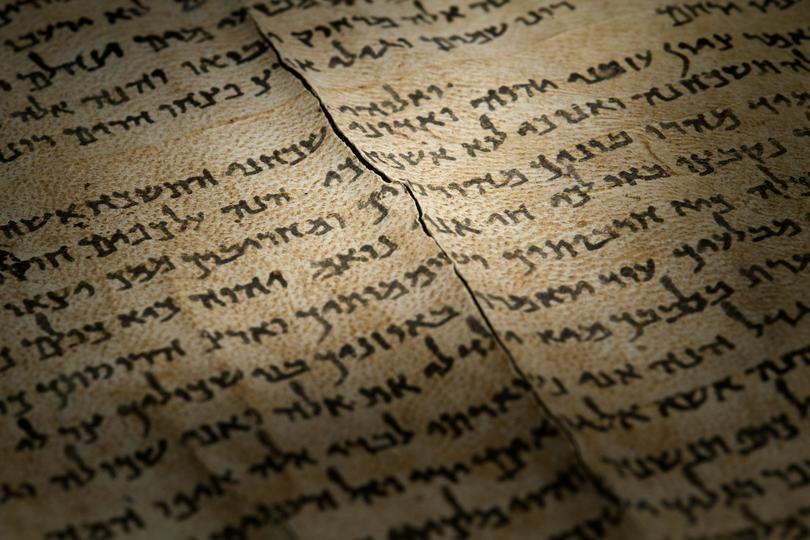
The central impact of the scrolls, Cai argued, is that they provide textual evidence of the Hebrew Bible dating back 1,000 years earlier than previously known manuscripts. More importantly, they reveal a state of textual plurality. "The Masoretic Text [the traditional Hebrew Bible] was just one of several textual versions circulating at the time, not the only one," Cai stated.
For example, in the Great Isaiah Scroll has the seraphim cry "Holy, Holy" twice, whereas the Masoretic Text has it three times. Likewise, in Psalm 145, the scroll version contains a verse beginning with the Hebrew letter Nun that is missing from the Masoretic Text but present in the ancient Greek Septuagint translation.
This evidence, Cai explained, has led scholars to conclude that the modern concept of a fixed, closed "canon" is an anachronism when applied to the Second Temple period. "At that time, the texts were still in a fluid state," he said.
Christian Origins in a Jewish Messianic Context
Cai dedicated a significant portion of the lecture to demonstrating how this apocalyptic and messianic context is indispensable for understanding Christian origins. He highlighted a text from Qumran (4Q521) that describes a messianic figure who would "heal the wounded, raise the dead, and proclaim good news to the poor"—a description strikingly parallel to Jesus' own words in the Gospels, yet containing elements not found in the parallel Old Testament passages.
Furthermore, texts like the "Melchizedek Document" (11Q13) portray a heavenly, angelic figure who acts as a final judge and redeemer, executing judgment on the forces of darkness. "These texts show us a world saturated with messianic expectation," Cai said. "Early Christianity emerged not in a vacuum, but as one powerful expression of these widespread Jewish hopes."
Shared terminology further strengthens this connection. Phrases central to Pauline theology, such as "works of the law" and "the righteousness of God," appear verbatim in the scrolls. The sharp dualistic distinction between the "Sons of Light" and "Sons of Darkness" also finds strong echoes in the Gospel of John and Pauline epistles. Cai emphasized that appreciating this shared spiritual world is key to discerning what was truly unique about the early Christian movement.
Theological Reflection
A key feature of the colloquium is its interdisciplinary approach, designed to foster "horizontal connections" between different fields of theology and religious studies rather than having specialists speak only to each other. In line with this goal, panelist Chen Yu, a doctoral candidate at Heidelberg University, offered a reflection from the perspective of systematic theology. He connected the scrolls' findings to what theologian Wolfhart Pannenberg termed the "foundational crisis of modern Protestant theology"—the collapse of the traditional doctrine of scripture under the weight of historical criticism.
Chen noted that the textual fluidity revealed by the scrolls poses a fundamental question, articulated by scholars like Konrad Schmid: If scripture itself is a product of ongoing interpretation, how can one version be considered uniquely authoritative? This, Chen argued, leads to the philosophical problem known as "Lessing's Ditch": the challenge of how events that happened in history (what was) can become the basis for eternal religious faith (what ought to be believed). The scrolls, he concluded, serve as a powerful "stress test" for any modern theological system attempting to bridge the gap between faith and history.