Editor's note: Rev. Johan T. Johansen is a Norwegian pastor with a unique heritage: he was born in Ankang, Shaanxi, to missionary parents and spent his childhood in China. Recently, China Christian Daily engaged in extensive correspondence with him regarding his family's century-long service and their donation of historical artifacts to the Ankang Museum.
During this exchange, to help Chinese readers better understand the spiritual soil from which these missionaries came, Rev. Johansen provided the following overview. In this piece, he offers an insider's perspective on the history of the Church of Norway, its relationship with the state, and the current trends of faith in a secularized society.
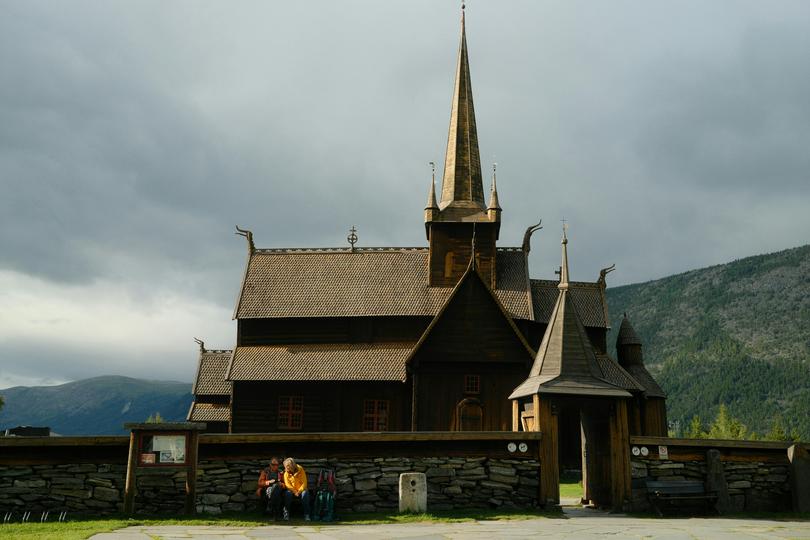
The Church of Norway remains the largest Christian body in the country and has historically been the "people's church."
Christianity became the state religion of Norway around 1030. In 2030, there will be great celebrations marking 1,000 years of Christianity in the nation. The church broke with the Holy See in 1536, and the Norwegian monarch served as the church's titular head from 1537 until 2012.
Today, it bears the name "Church of Norway" and is an Evangelical Lutheran denomination. On May 27, 2016, the Stortinget (Norwegian Parliament) approved a new legislative act to establish the Church of Norway as an independent legal entity rather than a branch of the civil service. This law took effect on January 1, 2017. However, the church remains state-funded.
Norway has moved toward a more neutral relationship between church and state, though the Church of Norway still receives substantial public support and is constitutionally recognized.
Members and others often still view the church as vital for life's milestones and as a social safety net in times of crisis or community need. Surveys find high appreciation for traditional church roles, even among those who do not practice regularly.
Compared with many countries, Norway is highly secularized. Many Norwegians are culturally Christian but do not engage in regular worship or personal religious practice. For many, Christian rituals like baptism, confirmation, weddings, and funerals remain culturally significant even if personal faith is weaker.
However, there are signs of renewed engagement among young adults. Several news reports point to increased church membership among 20-year-olds and greater interest in the Bible or faith communities—sometimes framed as a search for meaning or identity in uncertain times. This trend is nuanced: some analysts attribute it not only to faith renewal but also to cultural currents that connect religious identity with social or political viewpoints.
Beyond the Church of Norway, free churches and charismatic congregations add diversity to the Christian landscape. Within Christian communities, there is a range of theological perspectives, from mainstream Lutheranism to more conservative or charismatic groups—sometimes leading to internal debates about identity, practice, and public engagement.
Christianity remains a visible part of national life, traditions, and civic identity. The legal framework strongly protects freedom of religion, allowing a variety of Christian and non-Christian communities to exist and operate freely.