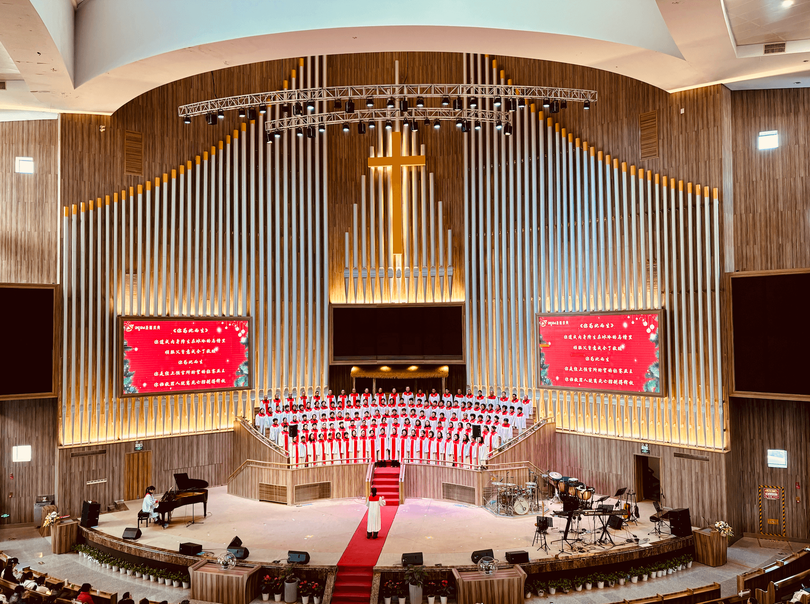
While Christmas is often viewed as a Western holiday that only arrived in China with the recent economic boom, the truth is far more complex. While controversy occasionally surfaces, the holiday has deep roots and unique local expressions.
Here are five surprising facts about the history and evolution of Christmas in China that might change how you view the holiday.
1. Christmas was celebrated in China as early as the Tang Dynasty.
Many assume Christmas is a new arrival, but its roots in China go back over a thousand years. Historical records, such as the Stele of the Propagation of the Luminous Religion in China, indicate that Christianity (then known as the Nestorian Church) arrived in 635 AD. Remarkably, Emperor Daizong of the Tang Dynasty used to send royal incense and imperial feasts to the church on "The Day of the Nativity" to honor the celebration.
2. It had a revival in the Ming Dynasty.
After fading for centuries, the celebration was revived in the late 16th century by Jesuit missionaries, such as Matteo Ricci. Ricci created a calendar of church feast days to help Chinese believers observe these dates, instructing them to gather for prayer and worship.
3. The 1920s Shanghai was already partying like the West.
The commercialization of Christmas isn't a 21st-century phenomenon. During the Republic of China era (1912–1949), particularly in cosmopolitan Shanghai, Christmas had already become a massive secular event. Old newspapers, such as Shen Pao, show that in the 1920s and 1930s, department stores held sales, restaurants offered Christmas dinners, and advertisements for cigarettes featured Santa Claus. For the urban elite of that time, Christmas was already a blend of entertainment, shopping, and socializing.
4. The "Peace Apple" is a uniquely Chinese invention.
In China, Christmas Eve is widely known as Ping An Ye (Night of Peace). Because the word for "apple" (Ping Guo) sounds like "peace," a unique tradition was born. On Christmas Eve, people gift each other beautifully wrapped apples, known as "Peace Apples."
5. The "Hardcore" Chinese Santa: Ao Bai
In recent years, a humorous internet meme has emerged among young Chinese netizens. They have adopted "Ao Bai"—a fierce, tough-looking warlord character played by Elvis Tsui in a classic Stephen Chow movie—as an unofficial Chinese Santa Claus. The joke is purely visual: the character wears a traditional red official's hat and has a long white beard. Netizens joke that they are waiting for a "red-hatted, white-bearded old man," only to share pictures of the scary warlord instead of the jolly saint.
From ancient royal feasts to modern internet memes, the history of Christmas in China is one of resilience and adaptation. Despite occasional debates, the festival has found a way to coexist with local culture, becoming a unique "dual-track" celebration—a holy day for believers and a season of joy for the public.
Originally published by the Gospel Times
- Edited by Katherine Guo