Editor's note: Between 1979 and 2009, the Protestant church in China was defined by rapid expansion and vitality, despite its relative immaturity and inherent challenges. Since 2009, however, many grassroots congregations have hit growth plateaus, facing a decline in momentum and a sense of stagnation. Yet, across all periods and contexts, certain "spiritual beacons" continue to sustain vitality and pass on faith across generations. Today, vibrant communities can still be found across diverse regions, theological perspectives, and denominational traditions. This feature offers a field-based portrait of one such local church.
I recently visited a congregation in a third-tier city in East China. Statistically, its growth is impressive—expanding from eight members to approximately 200 in just over three years. Yet numerical growth captures only what can be measured. Standing within the community itself, one is immediately struck by its vitality—a palpable sense of life and a tangible warmth of love.
In exploring the roots of this vitality, I found that it stems not from modern complex church-planting models, management systems, or pastoral frameworks. Rather, it lies in a faithful commitment to pastoral care, simple prayer, and a spirit of unity. This "return to basics" approach has enabled the young church to discover its own path to sustained vitality.
An Initial Pastoral Vision: Shepherding the Scattered
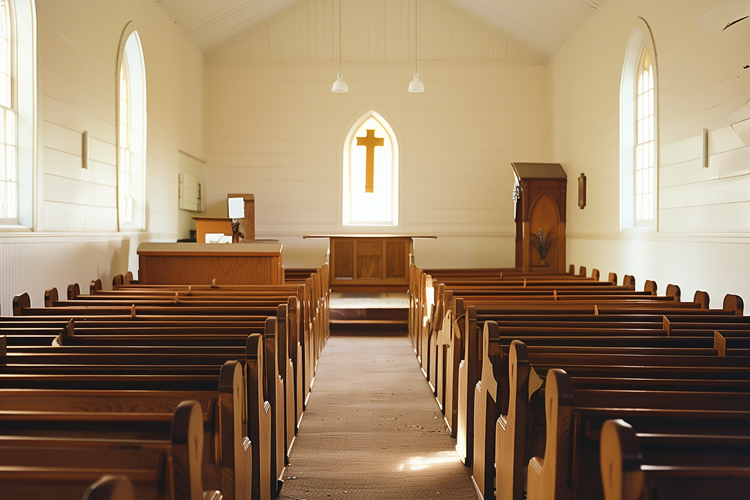
At a recent gathering, I entered a gathering venue on the second floor of a building in an urban development zone. Inside, congregants were joyfully singing hymn after hymn. Suddenly, the sound of heavy footsteps rose from the stairwell. At the entrance, an elder and several church members were assisting an elderly woman with limited mobility up the stairs and into the sanctuary. Once she was seated, the elder promptly asked a coworker to bring her a glass of water. During the welcome segment of the service, the elderly woman slowly rose from her seat and received the congregation's warm greeting: "Jesus loves you, and we love you too."
After the service, an elder in his sixties shared that he had initially planned to carry the elderly woman upstairs. Seeing that she was still able to walk, he chose instead to support her as she climbed. "I once carried a believer weighing nearly 90 kilograms," he recalled. "My face was almost touching the steps." As long as people are willing to come, he said, the church is willing to receive them.
This church, just over three years old, was founded by Elder Chen and represents a long-held vision of his. During the pandemic, he witnessed believers who lacked proper pastoral guidance and were exposed to misinformation, including claims that vaccines represented the "mark of the beast." He also saw believers gathering in underground parking garages and some informal meeting points, facing the risk of closure. Driven by these scenes, Chen resolved to establish a sanctuary that combined a suitable environment with sound, truth-based pastoral care.
With this pastoral vision and the support of several coworkers, Elder Chen set his plans in motion. As he worked through administrative procedures and searched for a suitable venue, his family—also Christians—offered their support, with his father-in-law playing a particularly significant role. Though an ordinary believer with no clerical title and no full-time involvement in ministry, his father-in-law cared deeply for the church and often donated money he had saved through frugality to congregations in need. After his passing, Chen's mother-in-law one day entrusted him with a sum of money her husband had set aside for church work. This became the seed funding for establishing the church.
After securing a meeting place and renovating it, a church born of calling and purpose officially took shape.
Prayer: Simple Reliance Over Knowledge
The joining of Sister Deborah (pseudonym), who is engaged in preaching and pastoral ministry, became a catalyst for the rapid growth of this newly established church.
Deborah had been paralyzed for five years. Doctors concluded that there was no hope of recovery and advised her to return home to await death. During that time, a Christian woman in her sixties, a cancer survivor, shared the gospel with her. Deborah asked her husband to take her to church, where several brothers and sisters prayed for her with tears. Over time, her condition improved markedly, and she gradually regained the ability to walk. Within six months, she read through the Bible six times. Later, sensing a calling, she enrolled in the church's volunteer training program and began serving in ministry.
When the church was first established, Deborah, who had been a believer for over a decade, was invited to join. Having personally experienced healing and being fully aware of her own limitations, including limited formal education, poor Mandarin proficiency, and the absence of systematic theological training, she chose a posture of complete reliance on God. "Our primary strategy is to rely on God," she said. "We don't have great talents. Every ministry we conduct is built on prayer."
As Deborah described, prayer fills every aspect of church life. The church holds a weekly evening prayer meeting and a Saturday morning prayer gathering dedicated to interceding for children. Each afternoon, for two hours, someone is on duty at the church to pray alongside believers seeking help. Prior to launching any training ministry, more than 30 pastors and ministry coworkers engage in a 21-day fast and prayer. After every service, church workers also pray for those requesting intercession.
I witnessed Deborah leading intercessory prayer before one gathering. She prayed rapidly, with conviction and intensity, at times pointing her index finger emphatically, at times clenching her fist, repeatedly declaring that God is mighty. He has the power to heal.
Behind such declarations are not only biblical promises but also numerous testimonies within the church. One heart patient traveled to a hospital in Shanghai for treatment but was unable to pay the required deposit and later returned for a follow-up examination, only to find all indicators had normalized. A young man who for years had avoided human contact, often appearing disheveled and covered in wounds, was restored through the prayers and care of fellow believers and later joined the church's PowerPoint ministry. A core church coworker was diagnosed during a routine checkup with a condition requiring lifelong medication; after three full days of fasting and prayer, medical indicators returned to normal.
The church now holds a weekly testimony meeting. No advance registration is required—participants sign up on the spot. At times, those who miss a slot must wait until the following week to share.
The church now holds a weekly testimony meeting. No advance registration is required—participants sign up on the spot. At times, those who miss a slot must wait until the following week to share.
Unity: The Key Lies in Self-denial of Pastors Themselves
Beyond testimonies of physical healing and answered personal prayers, this church bears another striking witness: unity. For a congregation that began with eight members and now sees a stable attendance of 100—while more than 200 are connected through its church online group—and whose members come from diverse faith backgrounds, such unity is particularly noteworthy.
"We discovered a principle: when we lay aside ourselves and center everything on God, the church will surely be renewed," Deborah said when reflecting on unity within the congregation. "The more we let go of self, the faster the church grows in renewal." To foster unity, the church has placed a suggestion box where believers may share feedback regarding elders, pastors, and other ministry coworkers. Deborah explained that church leaders take the initiative in self-examination and change to set an example. "Only when you are willing to change can others change," she said. "If everyone keeps things hidden, God has no room to work."
Though the church was founded to pastor "scattered sheep," Elder Chen notably avoids aggressive recruitment. Instead, he has focused on creating a welcoming environment characterized by radical equality, comfortable facilities, sound biblical teaching, and a secure, legal meeting space. "Most people who visit don't want to leave, and they naturally bring others," he observes. If there is a suitable church closer to a visitor's home, he will recommend that they attend there rather than asking them to join his own.
During several visits to church activities, I consistently sensed a harmony that felt like family life. Worshippers greeted one another with smiles upon arrival. Before services began, conversations unfolded naturally and affectionately. When an elderly woman appeared troubled, another member stepped forward to offer a hug and a gentle pat on her back. During praise, six or seven people at the front and along the sides of the sanctuary led the singing with microphones, while the congregation clapped and sang together...
- Translated by Poppy Chan